Acoustic engineering for battery storage

Every decibel, accounted for.

dBCAD places your battery yard on the real site in 3D and carries its sound, octave by octave, to every neighbouring home. Each result arrives with its margin to the night limit, the method behind it and the uncertainty under it.

01 Site

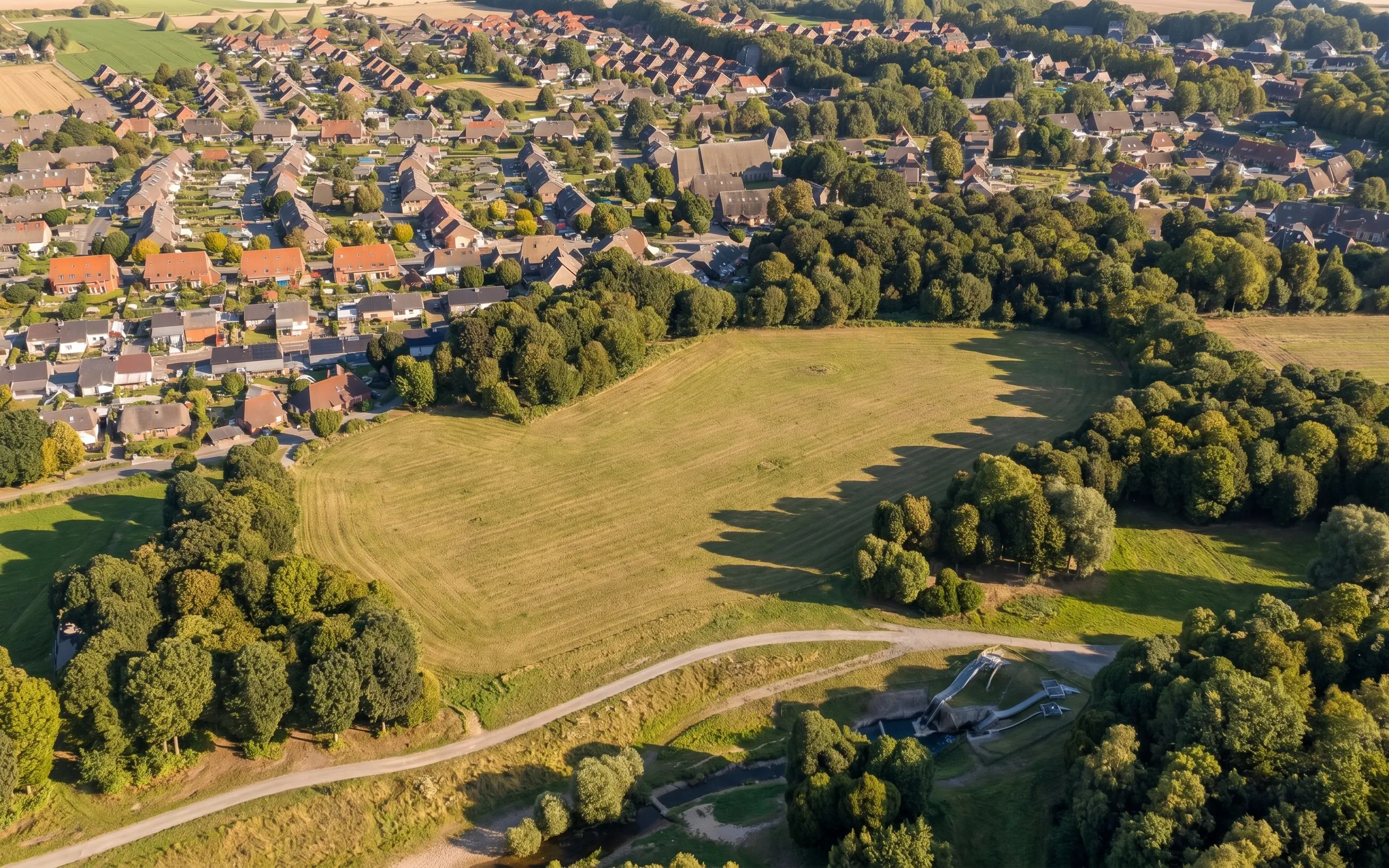
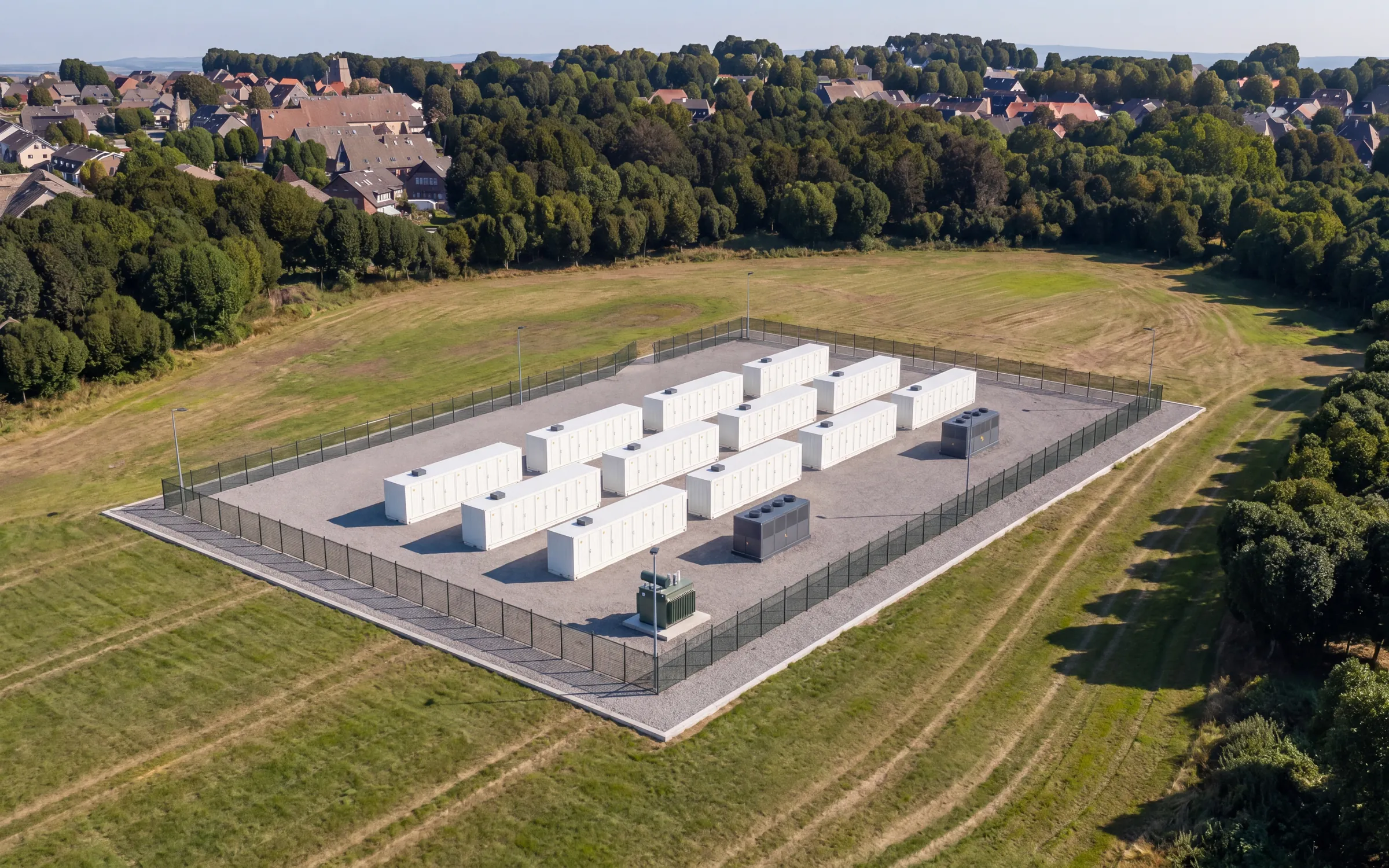
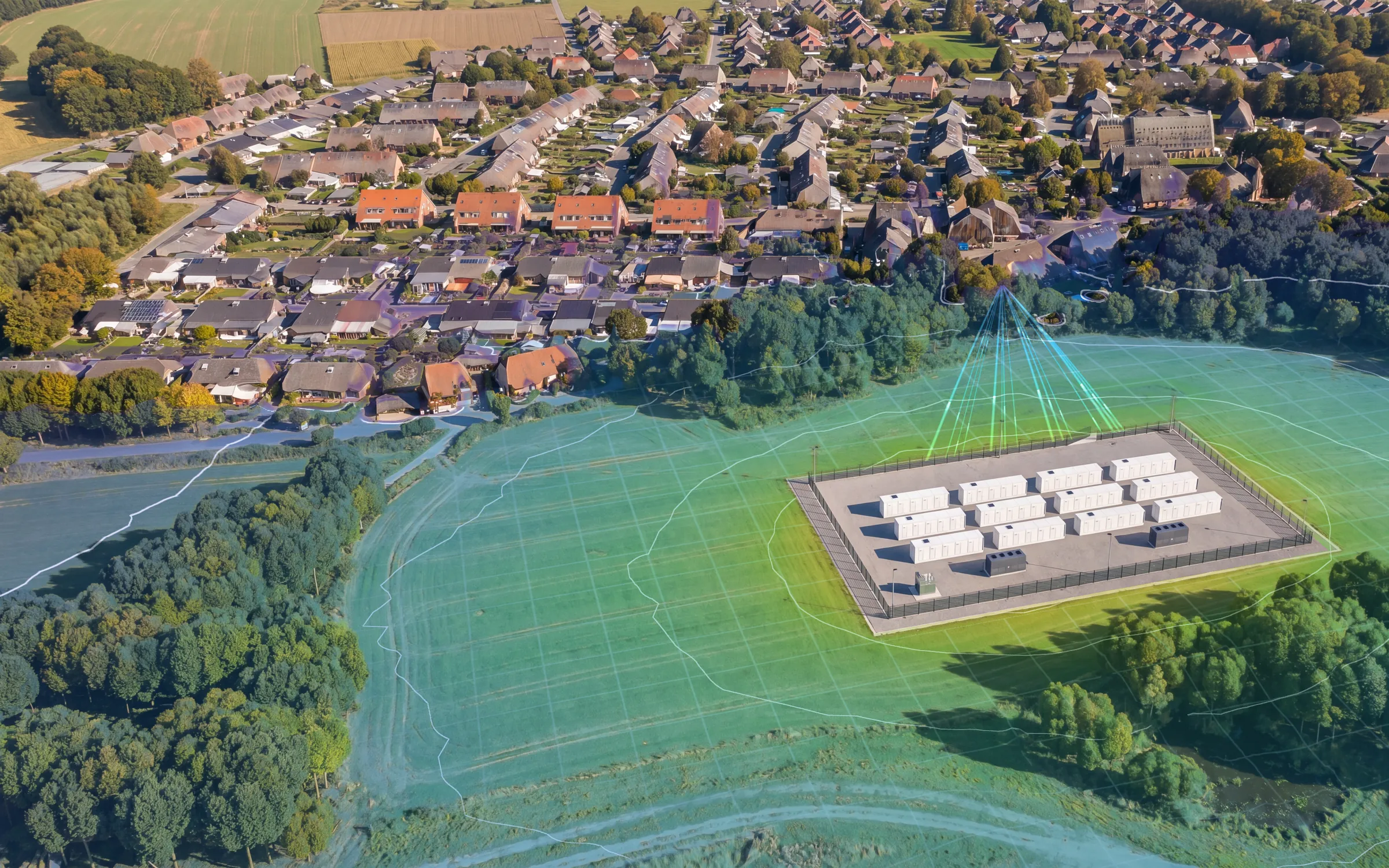
The real field. Units at true size.

Twelve 40-ft battery enclosures, two PCS skids and a 2.5 MVA transformer on open farmland near Marl, turned to follow the field. The nearest home stands 114 m from the centre of the yard.

02 Propagation

Nine octave bands. Every metre of ground.

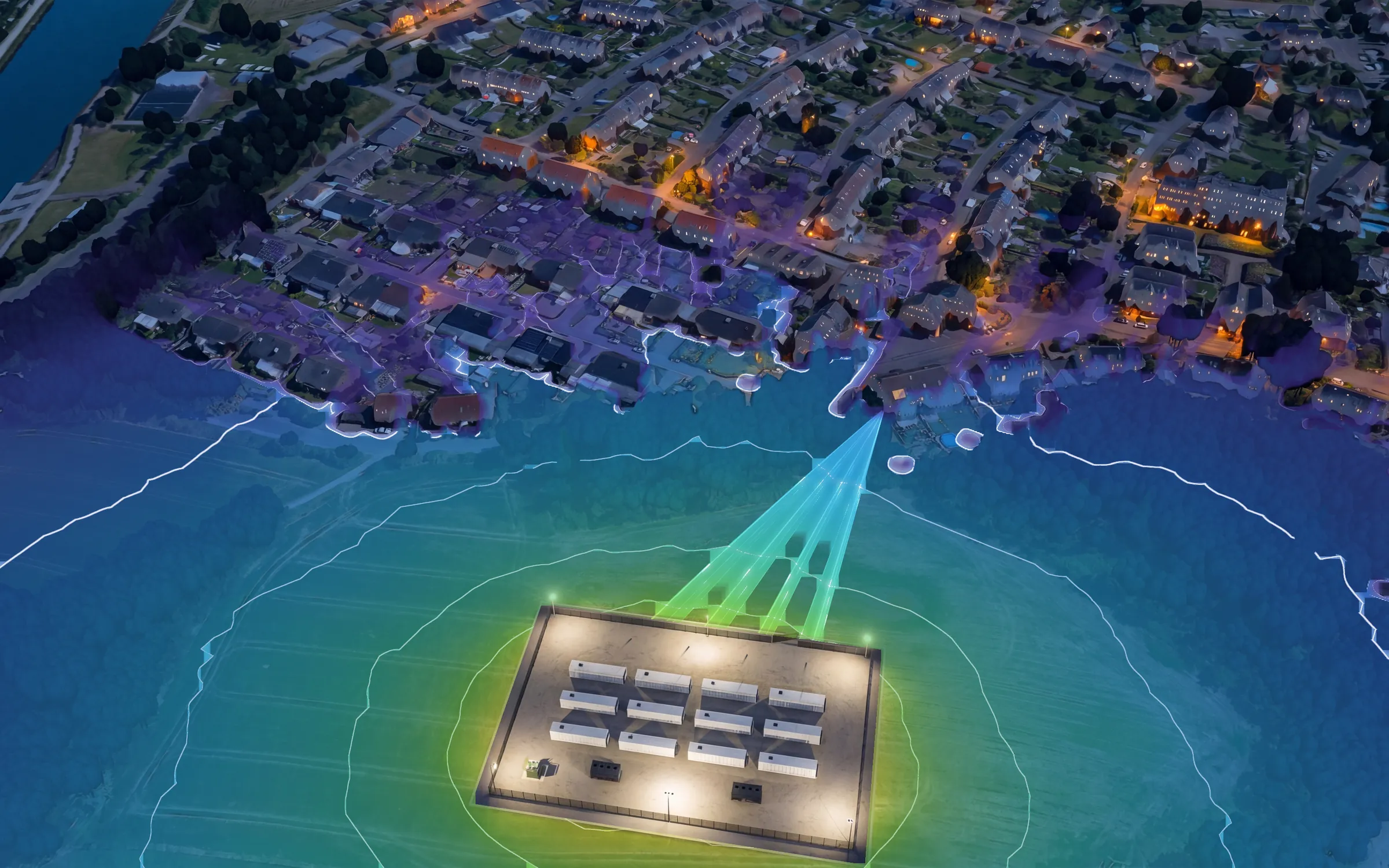
ISO 9613-2 from every face of every unit to a 4 m grid across 600 × 600 m. At 22:00 the period turns to night and the limit at these homes falls to 40 dB(A).

03 Attribution

Every path carries its share.

Fifteen units, fifteen contributions at the worst home, each traced to the unit that makes it. The front row of enclosures leads, so that is where a change pays.

04 Margin

Two homes over. No margin clear of the doubt.

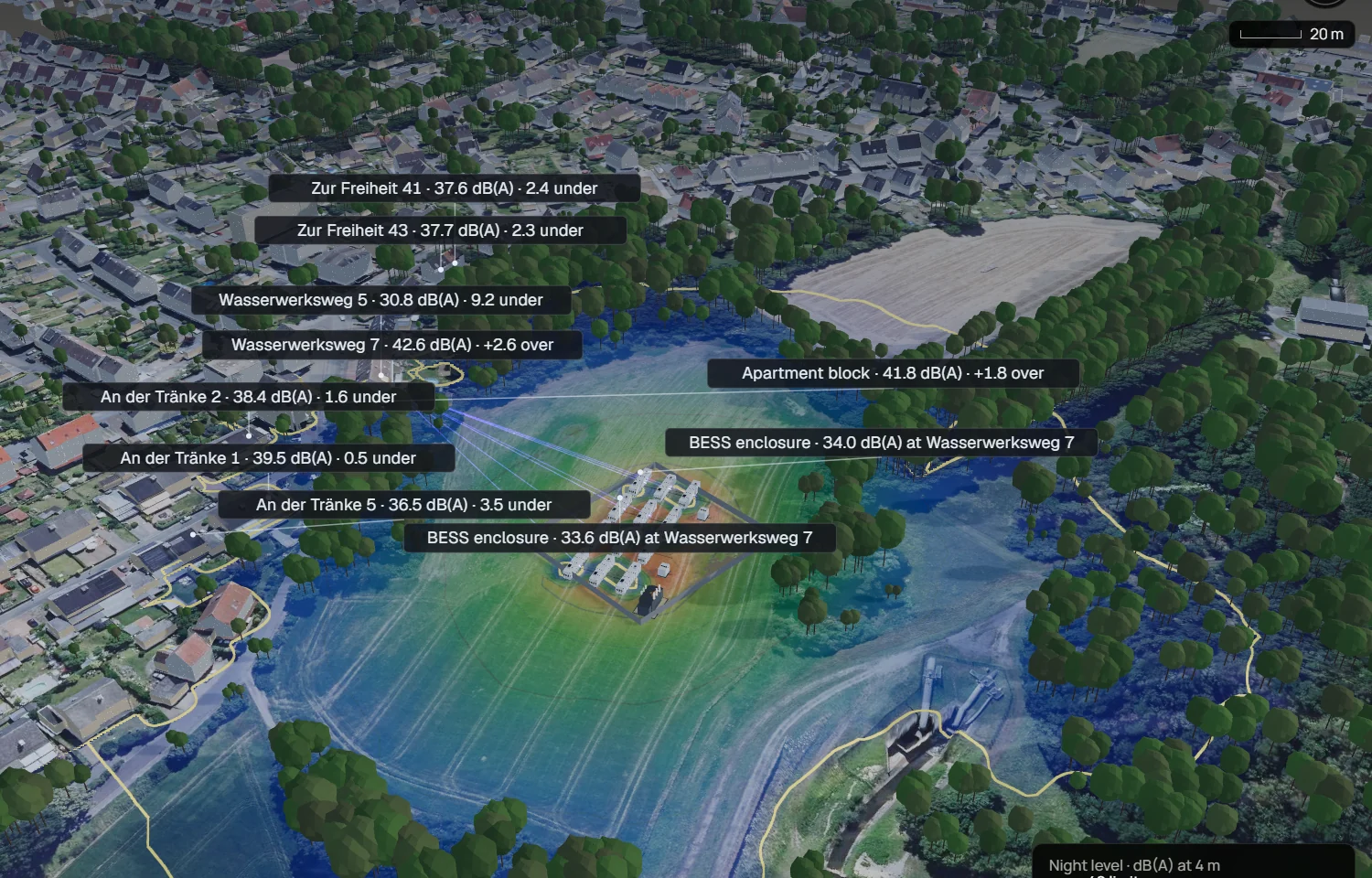
42.6 dB(A) at Wasserwerksweg 7, 2.6 dB over the night limit; the apartment block 1.8 over. Four of the other six meet it by 2.4 dB or less, and at the upper estimate the studio prints beside each level (P90), seven of eight are over. A single headline number would call six of them safe.

05 Decision

Decide with the uncertainty in view.

Move a unit and run it again. Every result keeps its method, its inputs and its uncertainty, and goes into the report your acoustician checks and signs.

The yard Example
Battery enclosures
12 × 40-ft
PCS skids
2
MV transformer
1 × 2.5 MVA
Fenced yard
76 × 50 m
Fence
2.4 m
Nearest home
114 m
Night field 22:00–06:00
3040506075 dB(A)

ISO 9613-2 · nine octave bands · 4 m grid over 600 × 600 m · bright line = the 40 dB(A) night limit

At the apartment block Night

Unit shares at the 4.0 m window, A-weighted · the total is their energetic sum

Eight homes Night

Exceeds the night limit at two of eight homes, by up to 2.6 dB. At the upper estimate (P90), seven of eight are over.

Limit 40 dB(A) · TA Lärm, zone WA (assumed) · ISO 9613-2, stated accuracy ±3 dB

Example site · Marl, North Rhine-WestphaliaTA Lärm · zone WA (assumed) · period day
01 The night limit

The night case decides the yard.

A battery yard runs the same units through the day and the night. The rule that binds it is the one you measure in the dark, at 22:00, at the receptor the home is asleep behind.

Sources
Enclosures, PCS, MV transformer
Binding case
22:00–06:00
Receptor
Facade, 4.0 m
Stated accuracy
ISO 9613-2 ±3 dB

The fans and the HVAC inside the enclosures run the same duty cycle at 02:00 as they do at 14:00. The PCS that convert DC to grid AC and the MV transformer that steps the voltage up for export are still on. A residential home is, in every jurisdiction dBCAD covers, quieter at night than the day. The two curves cross — and the night case is the binding one for the closest home.

A margin that does not exist at 02:00 cannot be designed in at 14:00.

Most redesigns do not come from a wrong method. They come from a noise finding that arrived late, after the design was already paid for. dBCAD takes the model to the receptor before the model is taken to the authority. Every home has its own line on a plan view, its own predicted level at night, and its own margin against the local night limit.

The example shows what happens when this view is taken seriously. Eight homes, one night period: Wasserwerksweg 7 sits 2.6 dB above the limit and the apartment block 1.8 dB. Four of the other six meet it by 2.4 dB or less, and at the upper estimate the studio prints beside each level, seven of eight are over. A single headline number would call six of them fine; the margin-versus-uncertainty view tells a different story.

The binding case for this sitenight · 40 dB(A)· zone WA (assumed)
02 The studio

Five steps from address to verdict.

The browser studio runs the real engine on every step. Each step is one decision a developer already has to make.

The studio opens on the open farmland at Marl, North Rhine-Westphalia, the eight nearest homes visible around the field.
Step 1 · Address · the studio opens on the site, the field draped with the surrounding homes · example · Marl, North Rhine-Westphalia
03 Eight homes, eight margins

Plan view of the night verdict.

The noise field around the yard, isolines at 5 dB steps, every unit at true size on the pad, and the eight nearest homes. Hover a home to read its predicted level and its margin against the night limit.

Fig. 1 Plan view · noise field at 4.0 m receptor height night · TA Lärm · WA · limit 40 dB(A)
Margin at night · eight homesdB vs 40
    dB(A) 30 → 75 Isolines every 5 dB, 35 to 60 dB(A) Limit line at 40 dB(A) · night · WA Below 30 dB(A) the field is clear; it fades out beyond the eight homes

    What it is · the engine's plan view at receptor height 4.0 m, painted from the 4 m noise grid · the rule · TA Lärm, zone WA (assumed), night 22:00–06:00, facade, 0.5 m in front of the window · Example · Marl, North Rhine-Westphalia

    04 Margin versus uncertainty

    Every margin here is smaller than its own uncertainty.

    ISO 9613-2 states its own accuracy as ±3 dB. The example's worst case exceeds the limit by 2.6 dB and a second home by 1.8 dB. The next four meet it by margins of 0.5, 1.6, 2.3 and 2.4 dB, all inside the method's stated window. A single number would have called eight homes fine. Every unit here runs on the generic library entry: source data assumed, no manufacturer measurement.

    Fig. 3Eight homes · predicted night level with the ±3 dB band, against the 40 dB(A) night limit dB(A) · night · WA · facade 4.0 m
    predicted night level · dB(A) ±3 dB band per ISO 9613-2 40 dB(A) night limit · TA Lärm WA

    What it is · the same eight homes, now with the method's ±3 dB band drawn around each predicted level and the 40 dB(A) night limit as a horizontal reference · Example · Marl, North Rhine-Westphalia

    05 Same units, two limits

    The same yard, the same units, two periods.

    The day limit is permissive; the night limit at the same home usually is not. Pick a home to read the predicted level against both limits at once.

    Fig. 4 Predicted level vs day (55) and night (40) limits TA Lärm · WA · 55 day · 40 night
    predicted level day limit 55 dB(A) night limit 40 dB(A) The night limit is the binding case for this site.
    06 How dBCAD reports a number

    A margin, with method and uncertainty.

    Three principles, kept by every report the studio produces.

    01Report, never assert

    It never says compliant.

    The studio reports a margin: predicted level against the limit at a named receptor, with the method and the uncertainty class. The developer's acoustician signs the report.

    What it reports
    level · dB
    What it leaves to you
    the verdict

    Method

    02Every quantity has a basis

    No bare numbers.

    Every value sits beside its unit (dB(A), metres), its basis (facade or outdoor) and the source it came from — manufacturer data, library default or a measured octave band.

    Value
    42.6
    Unit · basis
    dB(A) · facade
    Source
    library · ISO 9613-2

    Source model

    03Uncertainty is stated

    Every unit carries an uncertainty class.

    A is sound power per face (±1.5 dB), B is octave-band sound power (±2.5 dB), C is one dB(A) figure at a distance (±4 dB), U is the library default plus 3 dB and labelled as such.

    Class A
    ±1.5 dB
    Class B
    ±2.5 dB
    Class C
    ±4.0 dB

    Uncertainty

    See the night before you file.

    Put the yard on the real site. Read the margin at every home.

    The studio runs in the browser on the real engine. Request access to walk the example and pin your own site.

    At the apartment block · night
    42.6dB(A)
    2.6 dB over the 40 dB(A) night limit · at the upper estimate (P90) seven of the eight homes are over
    3040 (limit)506075 dB(A)
    Wasserwerksweg 7 · 117 m from yard centre · facade, 4.0 m receptor · TA Lärm · zone WA (assumed) · 22:00–06:00 · ISO 9613-2, stated accuracy ±3 dB · example · Marl, North Rhine-Westphalia